After nearly a year of sustained advocacy and multiple political roadblocks, Congress last week passed a major federal funding package that includes several long-standing life sciences priorities focused on innovation, access, and research stability.
Topline wins for the life sciences sector include:
- NIH funding: The NIH receives $48.7B in discretionary funding for FY 2026, marking a $415M increase over the previous fiscal year. This allocation counters the proposed 40% budget reduction from the administration, reflecting bipartisan support for sustained biomedical research.
- PPRV and Give Kids a Chance Act: Rare pediatric disease innovation incentives and expanded authority to require pediatric oncology combination therapy studies
- PBM reform: New transparency and payment reforms in federal programs
- Medicare telehealth: Extended flexibilities supporting modern care delivery
- Multi-cancer early detection (MCED): New Medicare coverage pathway for qualifying tests
- Clinical lab reimbursement stability: Delays scheduled Medicare clinical laboratory payment cuts and updates data reporting requirements, providing short-term stability while Congress considers longer-term CLFS reforms.
Refocusing WEIA on Workforce Outcomes
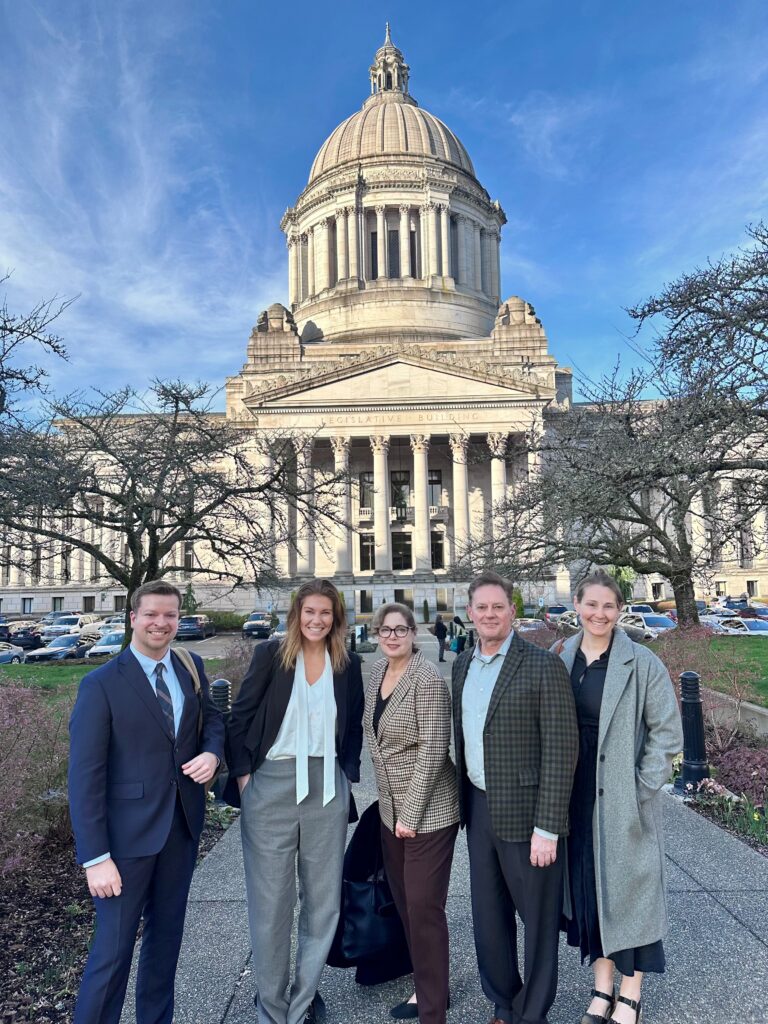
Last week, Life Science Washington organized a full day of meetings in Olympia along with the Washington Technology Industry Association and Aerospace Futures Alliance focused on the future of the Workforce Education Investment Account (WEIA) and what it means for Washington’s workforce and innovation economy.
We discussed how WEIA was created as a targeted compact with employers: our members agreed to a Business & Occupation Tax surcharge so the state could build high-demand degree and credential programs that prepare Washingtonians for family-wage jobs that life science employers need filled. We also raised concerns that, over the past two sessions, hundreds of millions of dollars have been redirected to other uses, and today less than 8% of WEIA funding is reaching high-demand workforce pathways. At the same time, workforce data shows roughly 75% of jobs will require postsecondary credentials, yet Washington still lacks enough aligned training capacity to meet employer demand, especially in technical fields like life sciences and advanced manufacturing.
We emphasized that while investments in higher education broadly are important, WEIA was designed to provide additional, targeted investments into programs that directly connect students to high-demand careers. Our members supported the surcharge because it was tied to preparing Washingtonians for jobs at companies right here in the state, and many of our companies have partnered with colleges and universities to help build those programs. When those programs aren’t funded, companies are forced to recruit talent from outside Washington, which is bad for employers, bad for communities, and bad for Washington workers. Our message was straightforward: if Washington wants Washingtonians filling Washington’s best jobs, WEIA needs to get back to doing what it was originally designed to do. In other words, “use WEIA for WEIA purposes.”
‘Millionaires Tax’ Introduced
Another major development last week was introduction of the so-called Millionaire’s Tax. The proposal would create a 9.9% income tax on household income over $1M, affecting about 20,000 households and raising an estimated $3.7B annually. Most revenue would go to the general fund, with a portion funding tax relief for small businesses and lower-income families. The tax would not take effect until at least 2028 and is expected to face legal challenges. Governor Ferguson has already said he does not support this version of the bill because it does not provide enough tax relief to small businesses and lower-income families.
Committee Crunch Continues
Last week also marked the legislature’s first major deadline passing bills out of policy committees. Following this week’s fiscal committee deadline, bills that have not advanced out of committee are unlikely to move forward this session.
Here’s an update on where key issues stand:
- 340B: Both 340B bills were heard in their respective fiscal committees, SB 5981 on Thursday and HB 2145 on Friday, with virtually identical testimony in both hearings. LSW testified against these bills in both hearings. Testimony against the bill focused on the impact on PEBB/SEBB and costs to employers. UW Medicine was asked for a breakdown of their 340B revenue. Both bills are scheduled for executive session on Monday.
- AI consumer protection: SB 6284 requires deployers of AI systems to conduct impact assessments and extends the expiration date of the AI task force and directs the creation of a workplace advisory group, among other provisions. Specifically, we’re reviewing a potential amendment to further protect scientific research and development. This bill was heard on Saturday. No committee vote scheduled yet. A similar bill, HB 2157, passed out of the House Trade, Economic Development and Veterans Committee and is in House Rules (essentially a gatekeeping step before consideration by the full chamber).
- Non-compete ban: SB 5437 and HB 1155 are concurrently moving through the process and awaiting votes in each chamber. Amendments have been proposed to allow non-compete clauses for senior executives, but it is unclear if legislators will agree to adopt them.
- Banning phthalates: HB 2402 was amended in the policy committee to include language suggested by AdvaMed and is awaiting consideration by the Rules Committee.